
It is the hairline, at both sides.
Not the sharp recession you associate with male pattern baldness.
Something softer than that, and in its way harder to describe.
A gradual thinning of the hair at the temples. The line is less defined. The skin is visible in a way that is subtle but changes the face.
You notice it most when your hair is pulled back.
A bun. A ponytail. Brushing it off your face to wash it.
The moment where the hairline is suddenly right there, visible, unmissable.
You have started wearing your hair differently. Not dramatically differently — you would not describe it as hiding anything. But you think about it now, where you didn’t before.
You have probably changed your shampoo. You may have tried something specifically for the temples — a serum, a spray — and watched it produce nothing you could call a result.
Here is what the follicle research actually says is happening at the temple.
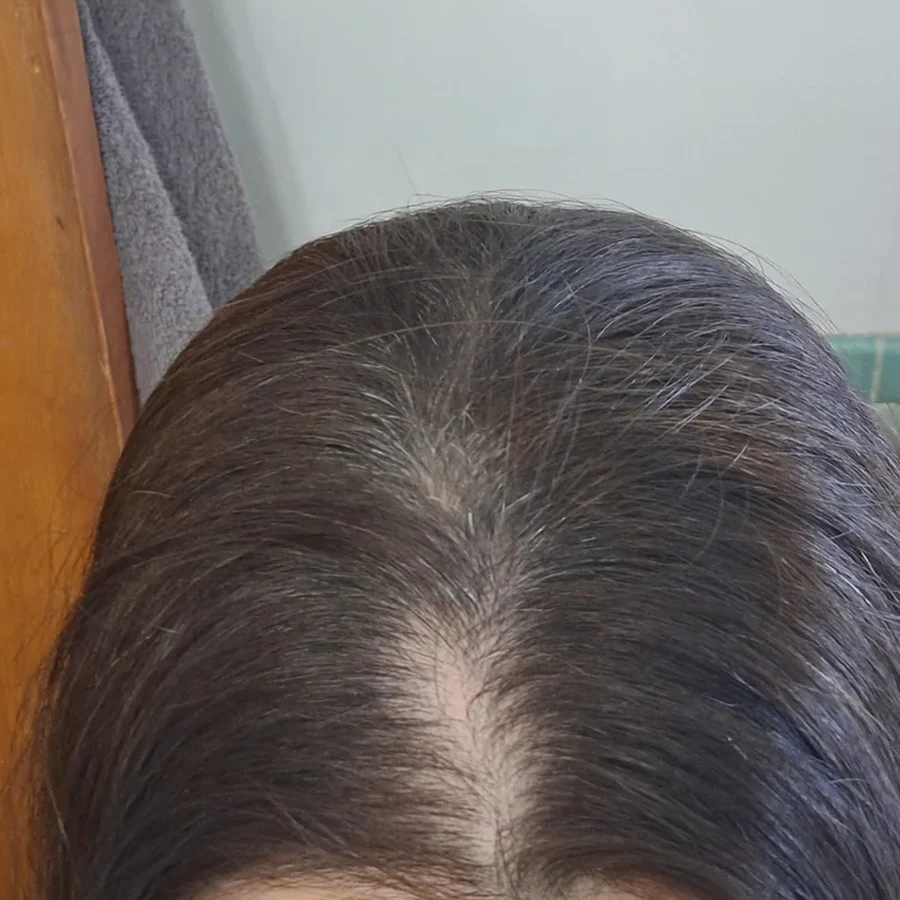 Day 1
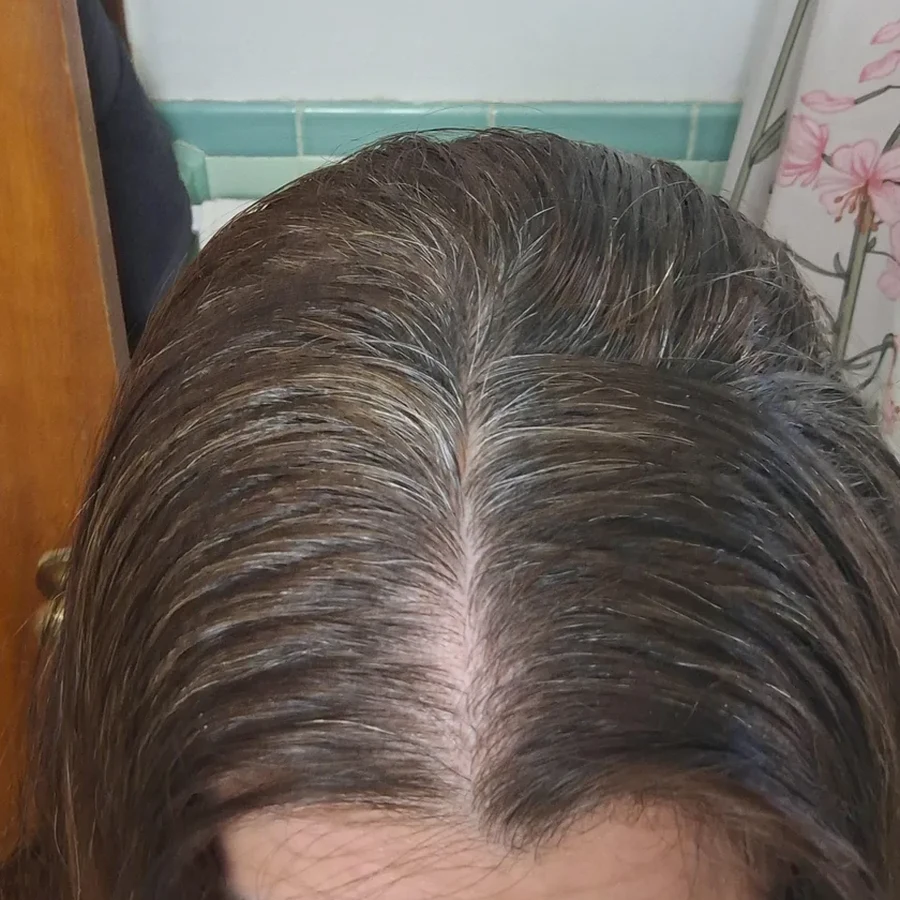 Week 4
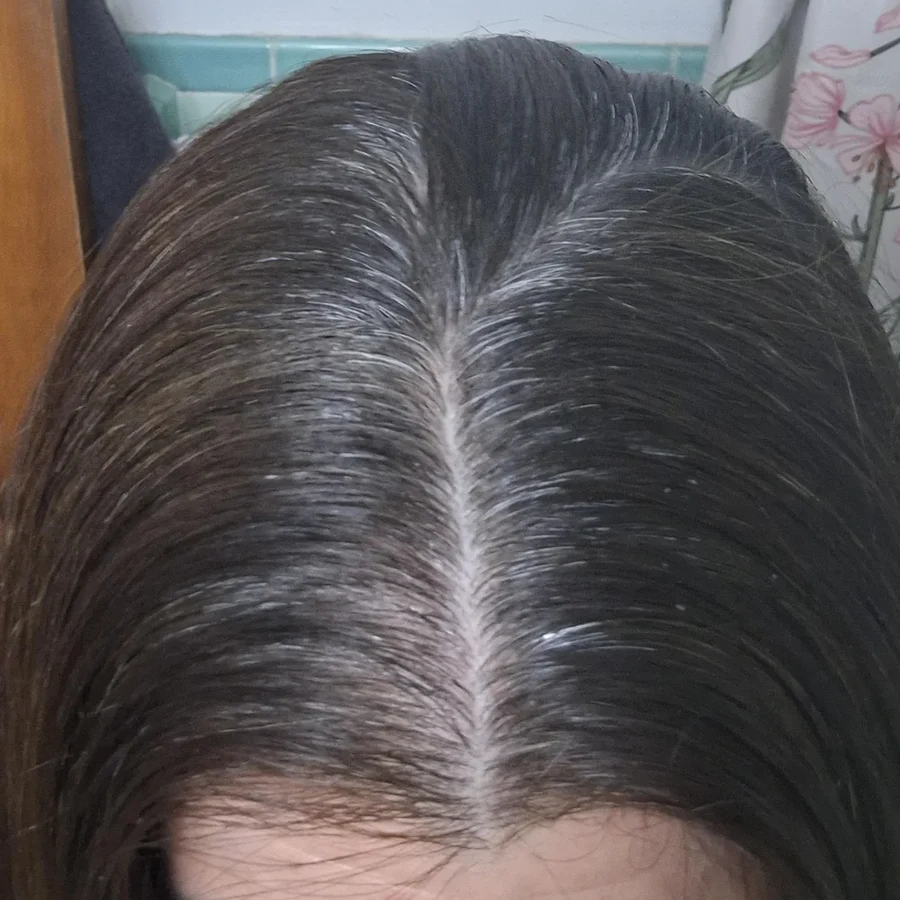 Week 8
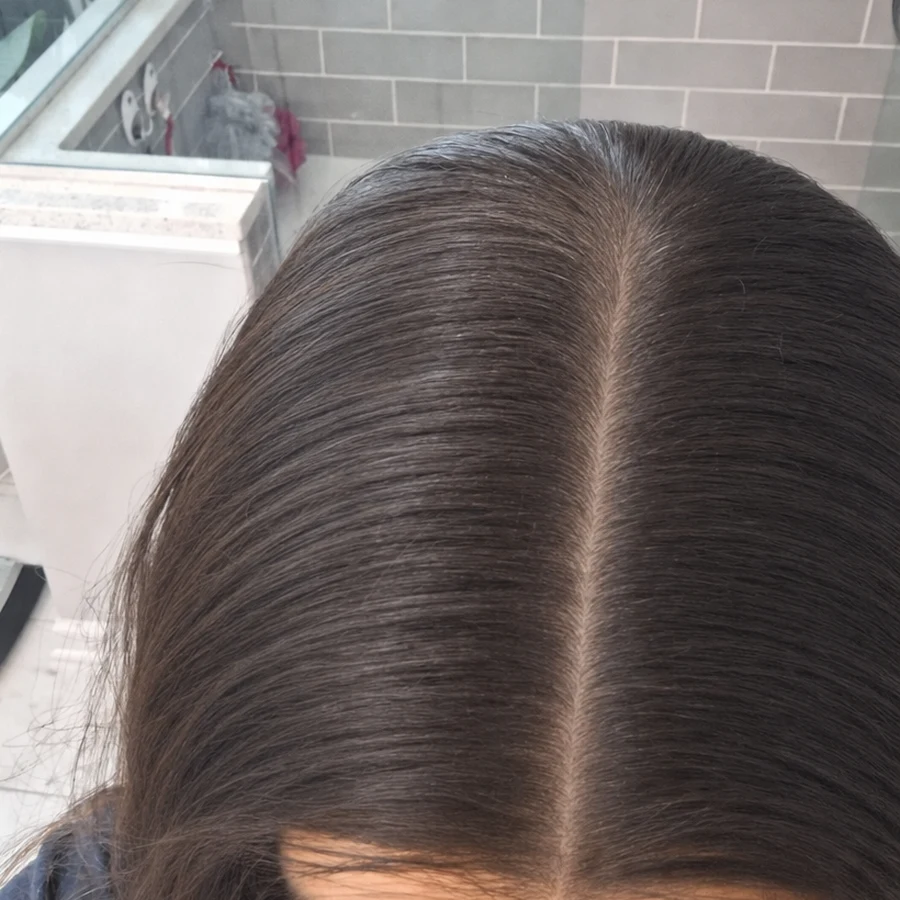 Week 12
Swipe to move through the stages
Nadia K., 47 · Bristol · Parting width · bloom peptide hair+scalp serum · 12 weeks
 Before
 After — 16 weeks
Jane M., 45 · London · Temple hairline · bloom peptide hair+scalp serum · 16 weeks
The temples are specifically difficult because they are visible in a way the crown is not.
The crown requires a particular angle to see. The temples are there every time you look in the mirror straight on.
Every time you wash your face. Every time you pull your hair back for any reason.
What changes is the face. The shape of it. The frame of it.
You have looked at your face your entire adult life, and the hairline was part of that — part of where the face begins and ends.
When that line moves, the face in the mirror is the same face with something slightly different about it.
You cannot always name what you are looking at. You just know it is not quite how it was.
The people around you almost certainly cannot tell. You can tell.
The question is what produced this — and whether the follicles at the temples can still be reached.
This is not vanity. This is not simply ageing. It is a specific hormonal cascade acting on specific follicles. It has a mechanism. And the mechanism has an intervention.
The biology is specific. Here are the three things happening at the follicle right now — and what each one means for what is still possible.
It is not one problem. It is three problems running at the same time.
This is why the standard treatments produce partial results.
Each of them addresses one part of the cascade. The other two parts continue unchecked.
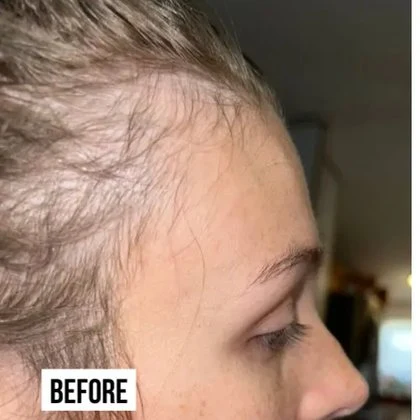 Before
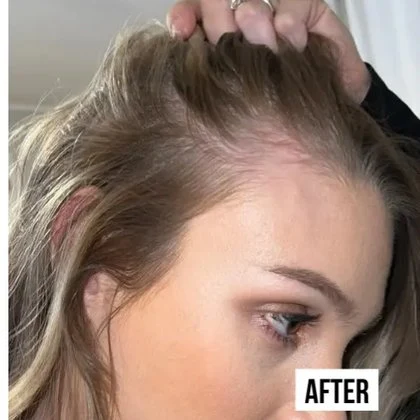 After — 16 weeks
Claire F., 49 · Edinburgh · Temple density restored · 16 weeks
Problem 1: DHT sensitivity at the follicle
Think of oestrogen as a shield wrapped around every follicle. DHT is in your bloodstream at 40 and at 50, delivered to the follicle with every heartbeat — the shield is what stops it getting in. As oestrogen falls, the shield thins and breaks open. The DHT has not increased. The protection has.
At 40shield intact
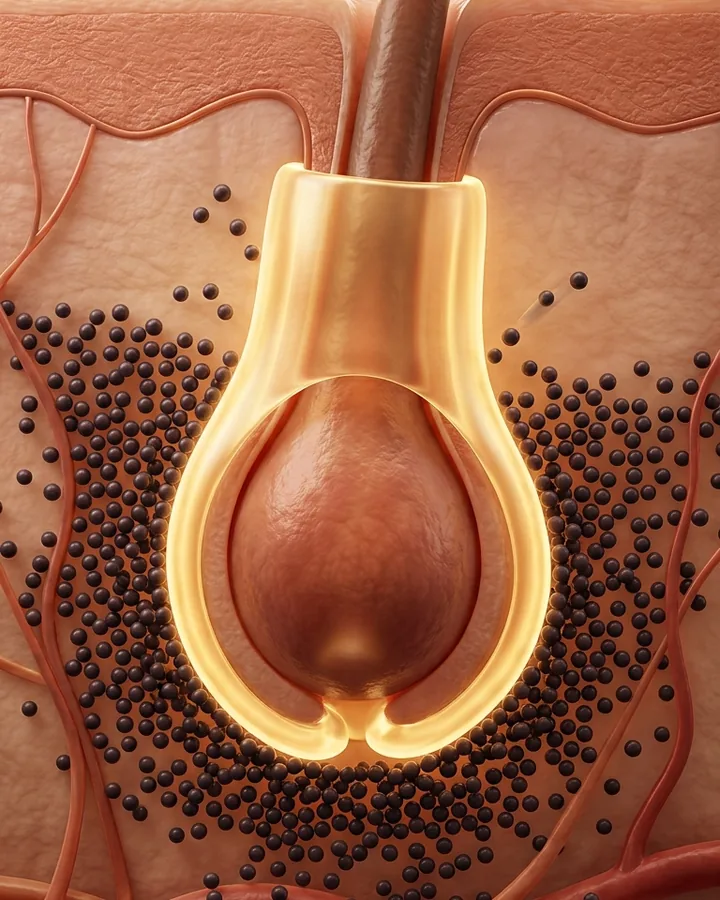
At 48shield broken
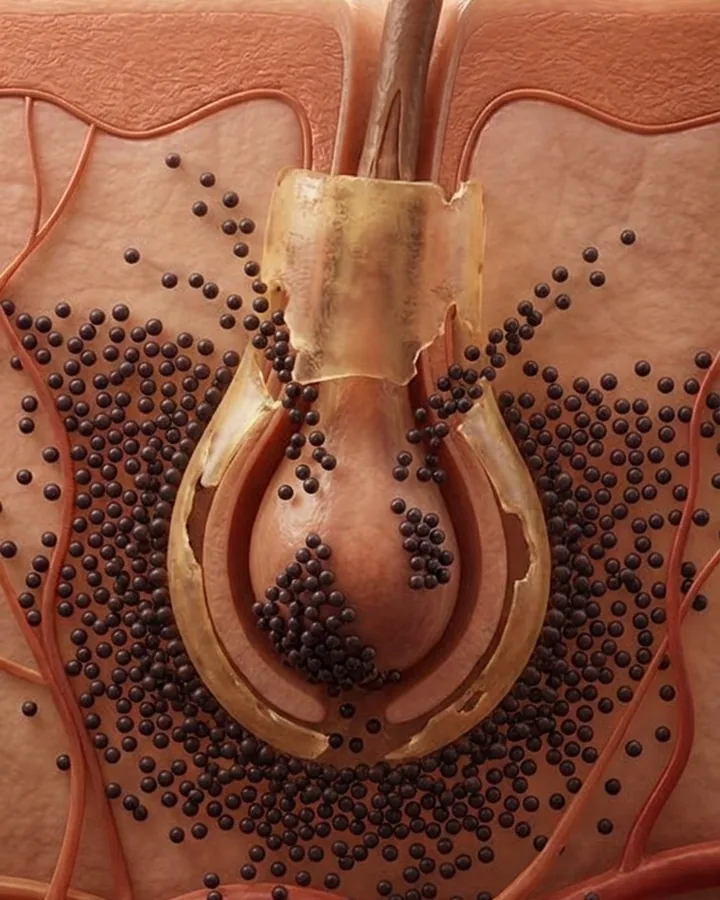
Oestrogen protects hair follicles. It keeps them resistant to DHT — the androgen that triggers miniaturisation.
When oestrogen falls in perimenopause, that protection falls with it.
DHT starts binding more readily to receptors in the follicle’s dermal papilla. Each growth cycle produces a slightly finer, slightly shorter hair. Over months and years, this compounds.
The follicle is not dead. It has been suppressed. This distinction is what determines what is still possible.
Problem 2: Microcirculation changes at the scalp
Every follicle is fed by a vessel roughly the width of the hair it grows. Oestrogen keeps those vessels open. As it falls they narrow — and the follicle at the end of that supply line receives less of everything, every single cycle.
At 40 → 48
Oestrogen also maintains blood vessel tone in the scalp.
As levels fall, scalp microcirculation decreases. The follicle receives less nutrient and oxygen delivery with each cycle.
A follicle that was receiving everything it needed at 40 is receiving measurably less at 48. Even in women eating well. Even in women otherwise healthy.
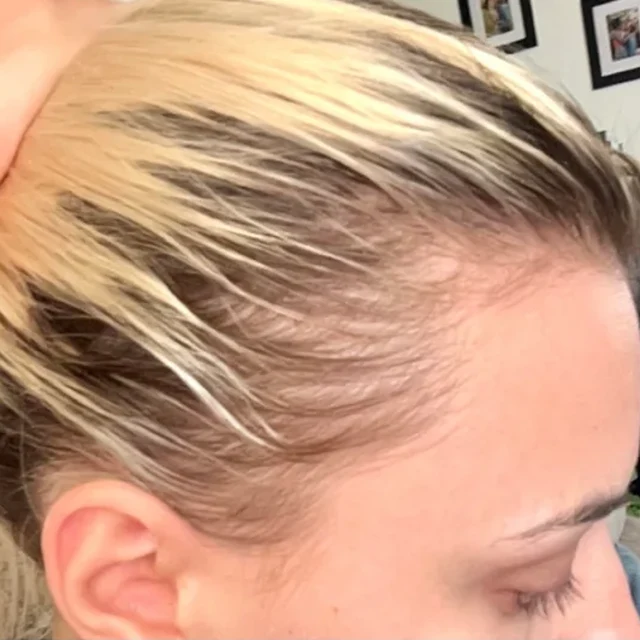 Before
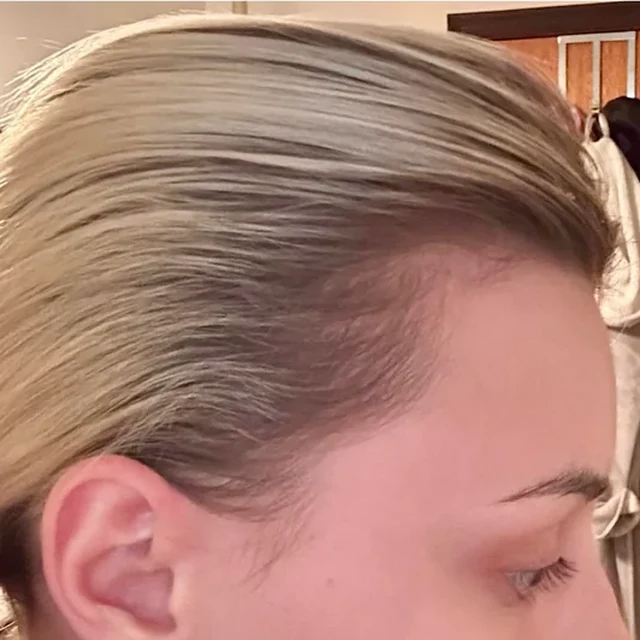 After — 5 weeks
Hannah R., 44 · Manchester · Temple hairline · 5 weeks
Problem 3: Growth-phase dysregulation
A follicle breathes. A long growth phase in, a short rest phase out. The hormonal shift shortens the in-breath and stretches the out-breath — so more follicles are resting at any one moment, and fewer are growing.
At 40mostly growing
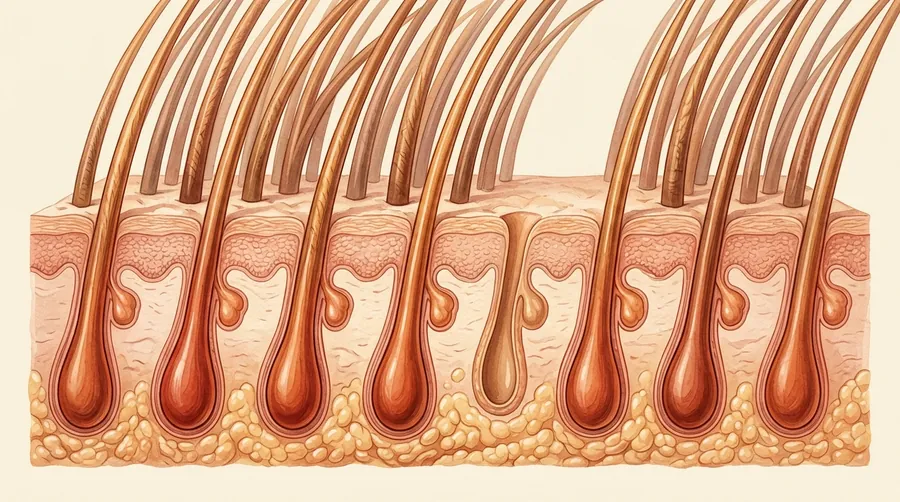
At 48mostly resting
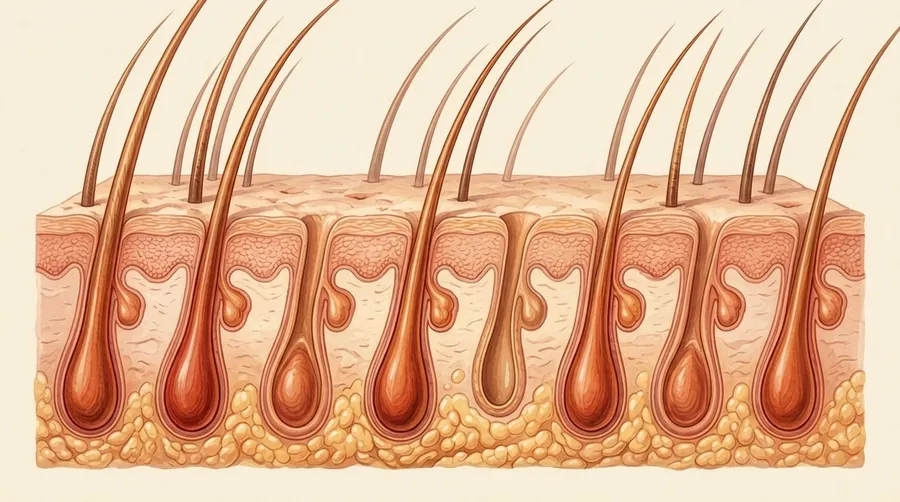
The hair follicle cycles between growth (anagen) and rest (telogen).
The hormonal shift shortens the anagen phase and lengthens telogen. More follicles rest at any given time. More hairs fall out at once. The hair that grows back comes back thinner.
The three problems amplify each other. DHT sensitivity increases resting phase length. Poor circulation reduces the signal quality that restarts growth. And follicles in extended rest become harder to re-activate over time.
The critical window
Follicles in rest are not gone. They can still be signalled.
But the window is real. A follicle that has been suppressed for 18 months is harder to reach than one suppressed for 6 months. A follicle that has fully miniaturised over years may not recover.
This is why the research consistently shows better outcomes in women who address the cascade early — while the follicle is suppressed but still viable.
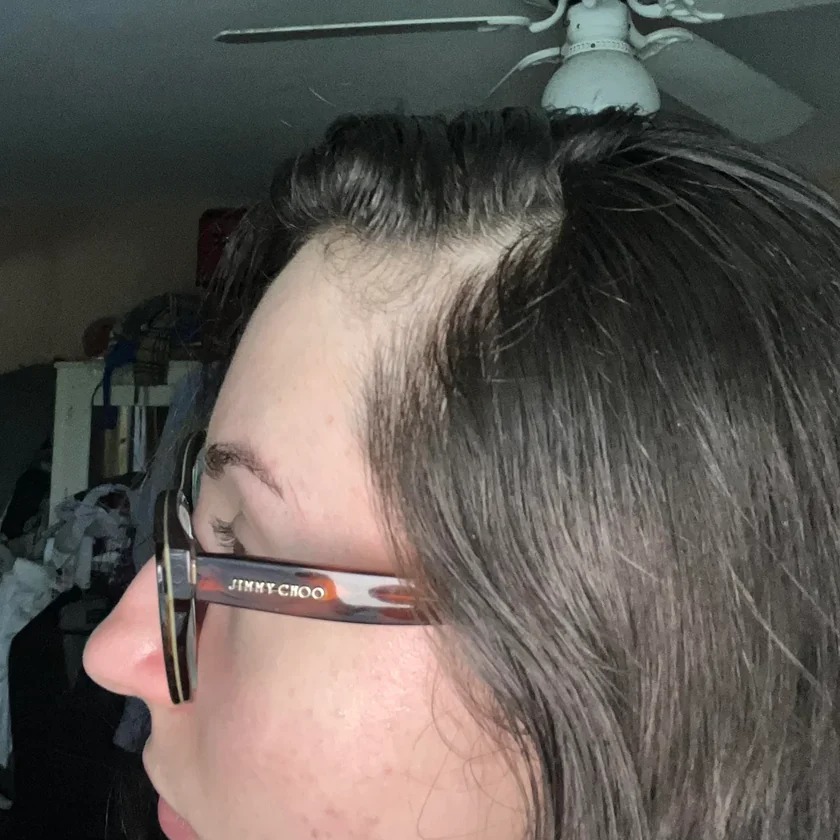 Before
 After — 16 weeks
Sophie R., 43 · Cardiff · Temple hairline · 16 weeks
This three-part cascade is why everything you have tried so far has produced partial results at best.
The treatments that fail for this kind of hair loss
Most products address one part of the problem.
Perimenopause-driven hair loss has three parts. That’s why most products produce partial results at best — and no result at worst.
Here is what the research says about the most commonly tried approaches:
Biotin supplementsMisses the mechanism
Biotin helps if you have a biotin deficiency. Most women with perimenopausal hair loss don’t. Biotin does nothing for DHT sensitivity, scalp circulation, or growth-phase signalling. Nail improvement doesn’t mean it’s helping the follicle.
CuivreActs on the three things that actually changed when your oestrogen did — not on a deficiency you probably do not have.
Viviscal, Hairburst, NourkrinAddresses downstream, not upstream
Marine protein complexes. Better than biotin. They provide structural building blocks for hair, but they don’t address the follicle signalling cascade. Good for hair quality. Insufficient for follicle-level thinning driven by hormone change.
CuivreSupplies the signal, not just the raw material. Building blocks do nothing if the follicle has stopped being told to build.
Minoxidil (Regaine)One mechanism, permanent commitment
A vasodilator. It improves scalp blood flow — one of the three cascade points. It doesn’t address DHT sensitivity or growth-phase signalling. And stopping it causes a rebound shed that can be worse than the original loss.
CuivreWorks on all three cascade points, not one — and because it restores signalling rather than forcing dilation, stopping it does not trigger a rebound shed.
DHT-blocking shampoosWashed away in 90 seconds
Contact time is too short to penetrate to the follicle. You are paying for the illusion of addressing DHT. A shampoo cannot change what is happening in the dermal papilla. The active leaves before it can act.
CuivreA leave-on serum. The actives sit on the scalp for hours, not ninety seconds.
Hair growth serums (single peptide)Right idea, incomplete formula
Copper peptide serums, or single-signal peptide products, address one point in the cascade. They work — partially. The research on combination approaches consistently outperforms single-peptide results, particularly for hormone-driven thinning.
CuivreRight idea, finished properly. Six peptides across all three cascade points instead of one peptide against one.
HRT aloneNecessary but not sufficient
HRT restores oestrogen, which has a protective effect on follicles. It doesn’t directly block DHT. It doesn’t address microcirculation. And the follicles that shifted into rest before HRT started may stay there — HRT gives them permission to wake up, not the signal to do it.
CuivreHRT gives the resting follicles permission. Cuivre gives them the instruction.
Typical serum
The conclusion from the research is not that these treatments are useless. It is that none of them addresses all three cascade points simultaneously.
Which is precisely what the six-peptide formulation does — and why the research on combination approaches is considerably more compelling than any single-mechanism study.
It is also why Minoxidil on its own was only ever a third of the answer. Temple follicles carry the highest concentration of androgen receptors on the scalp — they go first, and they are the most sensitive to whether the DHT arm is actually being addressed.
Reader code applied automatically
What this looks like for you
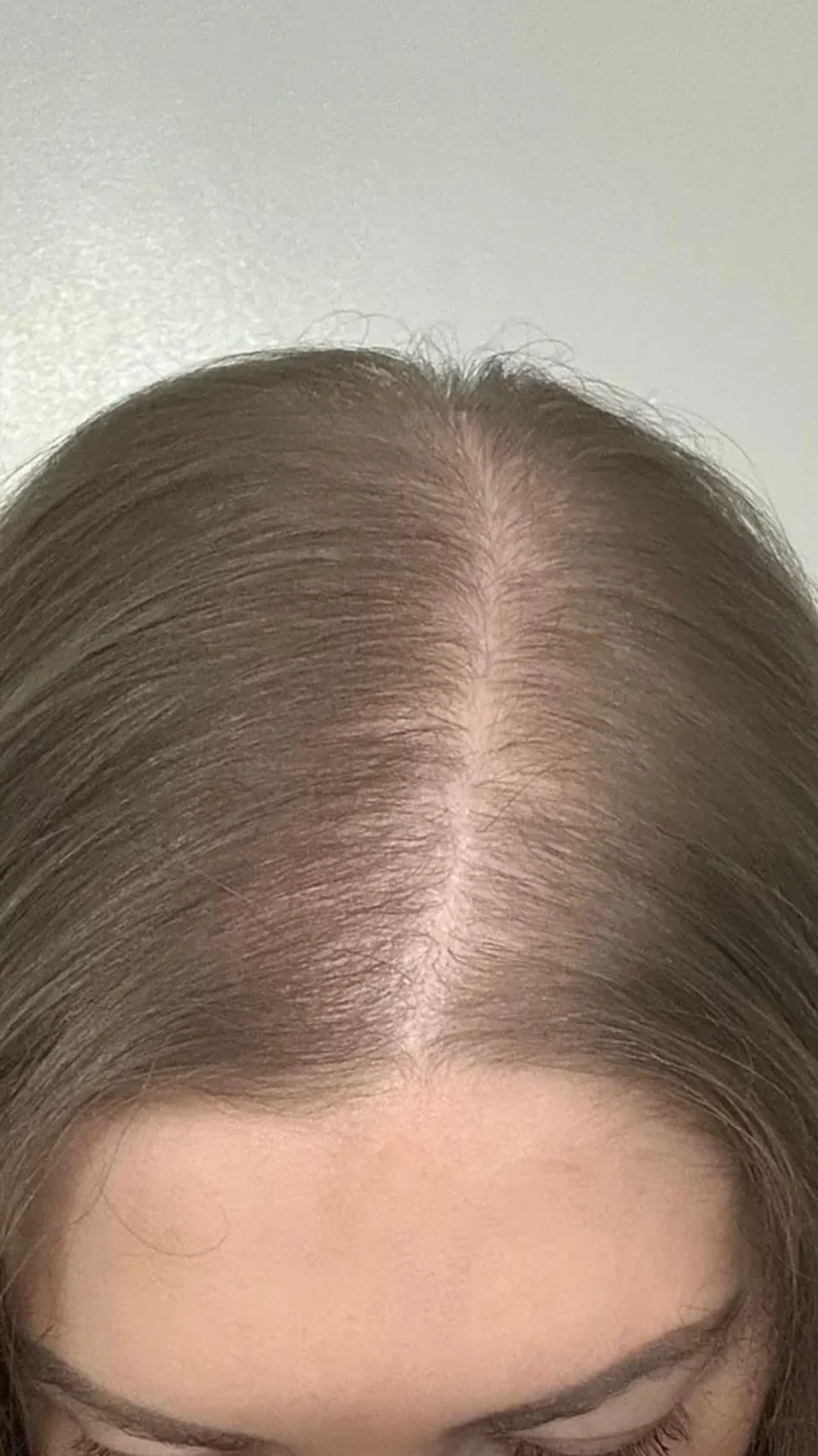
One customer, one parting, twelve weeks — photographed from above at each stage.
What the hairline looks like on the other side of this
The temples respond on a slightly longer timeline than the crown.
The follicles there have often been suppressed for longer before the change becomes visible.
What happens in the first weeks is in the scalp. Less tightness. A different quality at the temple skin.
The drain changes around weeks six to eight.
And then, somewhere in weeks fourteen to twenty, you pull your hair back.
You are not doing it to check. You are doing it because you are washing your face.
And you look. And the line is slightly closer to where it used to be.
Not all the way back. But closer. The skin at the temple that had been empty is beginning to fill at the margin.
The face in the mirror looks slightly more like itself than it did six months ago.
That is what the biology, when it responds, produces. Not a new face. A familiar one.
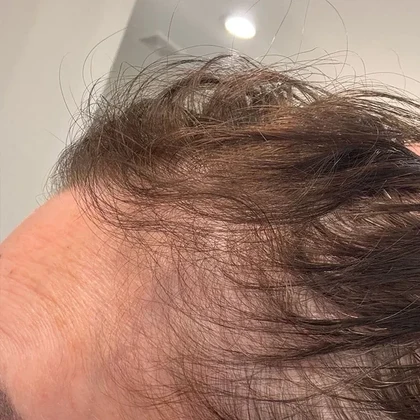 Before
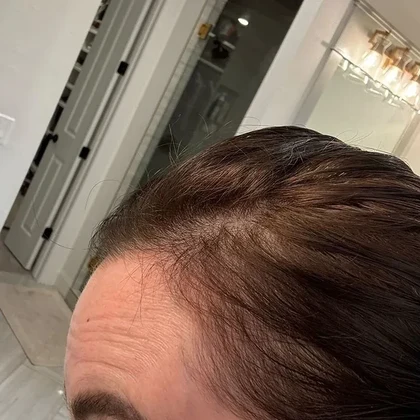 After — 16 weeks
Kate N., 51 · Birmingham · Temple hairline · 16 weeks
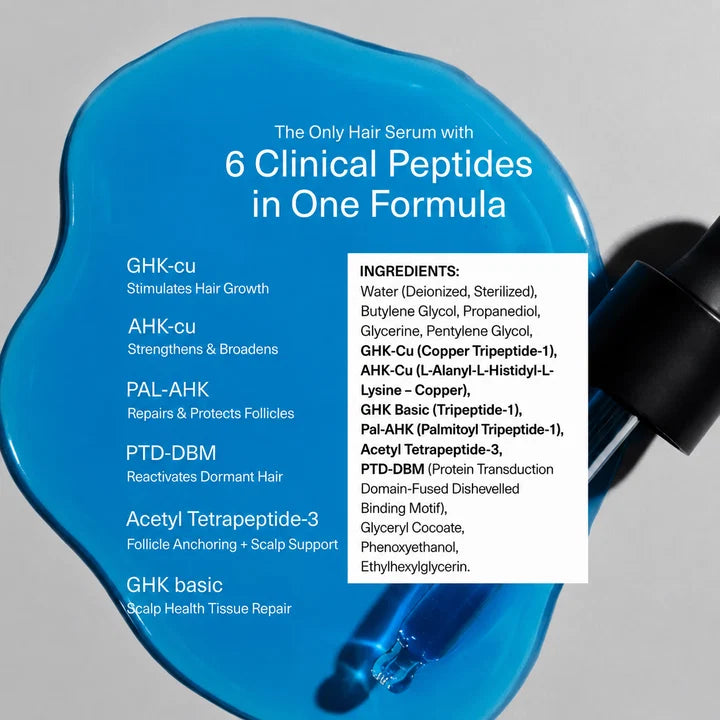
What Cuivre contains — and why each ingredient is there
The six peptides in Cuivre are not a proprietary blend with a marketing name.
Each one was selected because it addresses a specific, documented failure point in the perimenopause hair loss cascade.
No filler. No carrier ingredient dressed up as active. Six actives. Six mechanisms.
Cuivre · all six
Biotinoyl Tripeptide-1
Biotinoyl tripeptide-1 (signal peptide)
Stimulates keratinocyte differentiation and upregulates the expression of laminin — the protein anchoring the follicle to its dermis matrix. Clinical studies show 121% increase in anchoring strength. The follicle that isn’t held properly sheds prematurely.
Copper Tripeptide-1
GHK-Cu (regenerative peptide)
Increases follicle size and the proportion of follicles in active growth phase. Reduces DHT sensitivity at the receptor level. Stimulates collagen and blood vessel formation in the scalp. One of the most-studied peptides in follicle biology — addresses all three cascade points to some degree, which is why it’s the anchor of the formula.
Acetyl Tetrapeptide-3
Acetyl tetrapeptide-3 (extracellular matrix peptide)
Stimulates the ECM proteins that create the structural scaffolding around the follicle. In combination with red clover extract, clinical research shows 46% reduction in hair loss and 13% increase in hair density. This is the anti-DHT-sensitivity arm of the formula.
Myristoyl Pentapeptide-17
Myristoyl pentapeptide-17 (keratin synthesis)
Upregulates keratin gene expression in the hair shaft. Where the other peptides address the follicle’s survival and activity, this one addresses the quality of the hair it produces — thickness, tensile strength, resistance to breakage. The hair that grows back grows back stronger.
Oligopeptide-54
Oligopeptide-54 (growth factor mimic)
A synthetic growth factor that mimics the action of KGF (keratinocyte growth factor) — the molecule responsible for extending the anagen (growth) phase. Directly addresses the shortened growth cycle that is the third cascade point. More follicles in growth, for longer, each cycle.
Hexapeptide-11
Hexapeptide-11 (follicle protein)
Derived from yeast protein, this peptide improves the mechanical strength of the hair fibre and the scalp’s structural integrity. Works synergistically with Oligopeptide-54 to maintain the growth environment that the other five peptides have worked to restore.
The formula is applied to a dry or towel-dry scalp and left on. It is not rinsed away. The peptides remain in contact with the follicle for hours — long enough to penetrate and signal.
This is the delivery problem that makes shampoo-based approaches physiologically impossible to work at a follicle level. Contact time is not a minor consideration. It is the mechanism.
What does this look like in practice? Here is the realistic timeline.
The realistic timeline
Hair biology is slow. The growth cycle is 84 days. No product changes that.
What changes, if the signal reaches the follicle, is what happens inside that cycle.
The scalp changes first
Most users notice a change in scalp quality before they see any hair change. Less tightness. Less tenderness on manipulation. A different feel at the root. This is the anti-inflammatory component beginning to act. It is not visible — it is tactile. And it is the first signal that the cascade is being interrupted.
The shed slows
As follicles begin transitioning back toward anagen, the number in telogen (rest/shed phase) decreases. The drain changes. Not dramatically — not a morning-to-morning reversal. But measurably, over the course of weeks five to eight, there is less in it than there was. Users who have been counting know the difference.
New growth appears
Follicles re-entering anagen begin producing new hair. It is short — the hair cycle does not jump forward. The new growth appears as short, fine strands, most visible at the hairline and parting. At week twelve, most users can see or feel a change in density at the affected area.
Density becomes visible
The new growth at the temples reaches length. The fine hairs that appeared at week eight are darker and longer now, filling the margin of the hairline where there was skin. You can pull your hair back. This is the window where the photographs taken at the start of the protocol show what has actually changed.
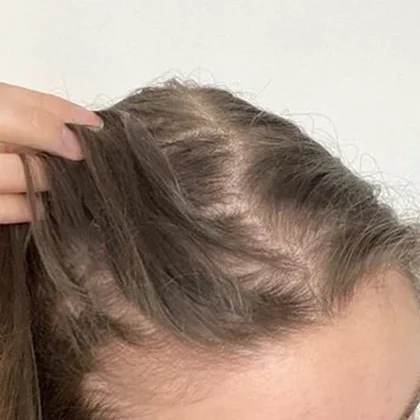 Before
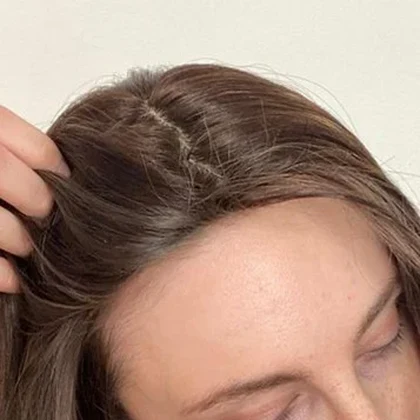 After — 16 weeks
Emily C., 42 · Bournemouth · 16 weeks
Before you look at the price, look at what the shelf already costs you.
Roughly £69 a month, spread across three products — each one working on a different piece of the problem, and none of them on all three.
Cuivre is £42 a month. One bottle. All three cascade points.
That is £1.40 a day — less than the coffee you drink while reading this, and less than you are almost certainly spending now on products that each solve a third of it.
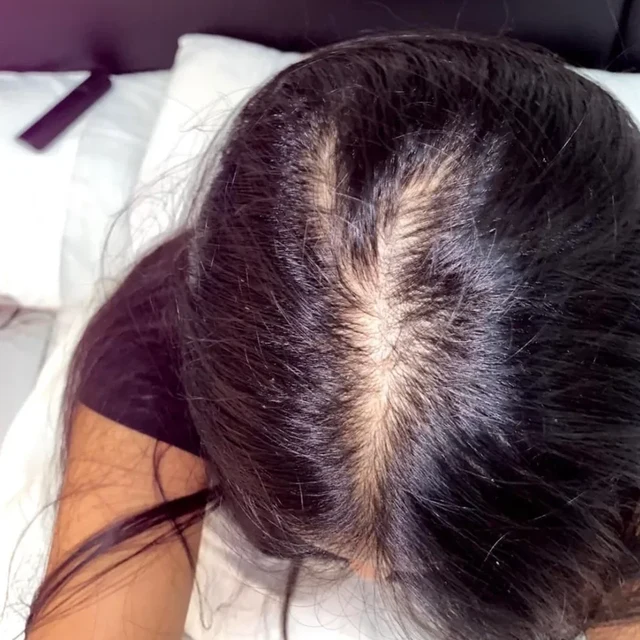 Before
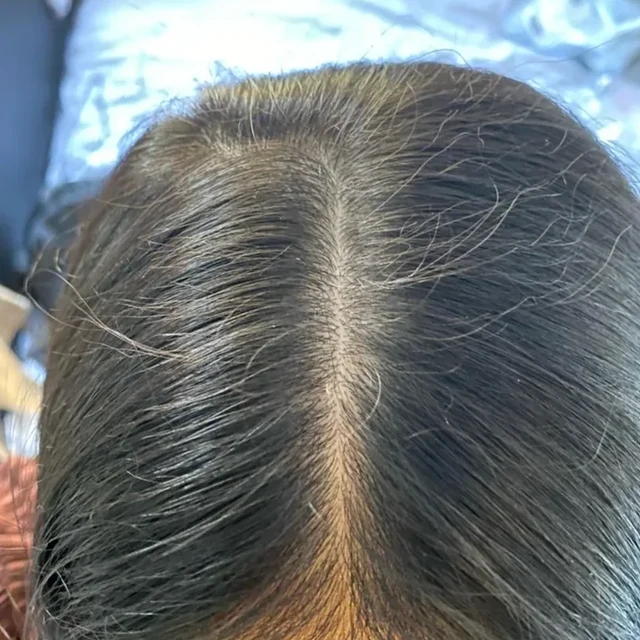 After — 16 weeks
Priya S., 46 · Leicester · Parting & crown · 16 weeks
Common questions
How long before I see a result?
The scalp change — less tightness, different quality at the root — typically within two weeks. The shed reduction is usually measurable by weeks six to eight. Visible density change appears between weeks twelve and twenty, depending on how long the follicles have been suppressed and how severely.
The 30-day guarantee covers the first milestone. The 120-day guarantee covers the second. We built them around the biology, not around a marketing claim.
What if I’m already on HRT?
HRT and Cuivre address different parts of the cascade. HRT restores oestrogen protection — which helps. It does not directly address DHT sensitivity at the follicle, scalp microcirculation, or growth-phase dysregulation. Cuivre addresses all three. Most users on HRT see results. Users on HRT who have been waiting for the HRT to fix the hair and it hasn’t — Cuivre is specifically for this situation.
How do I use it?
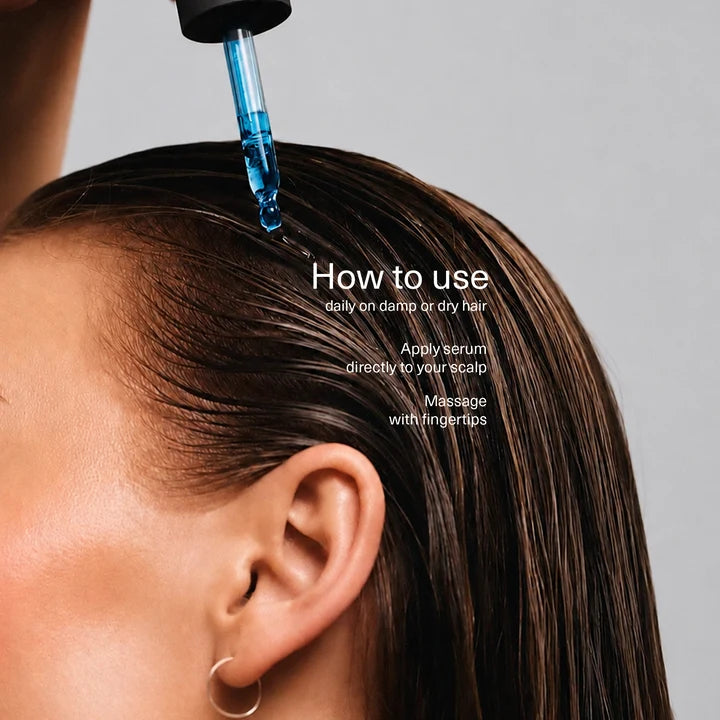
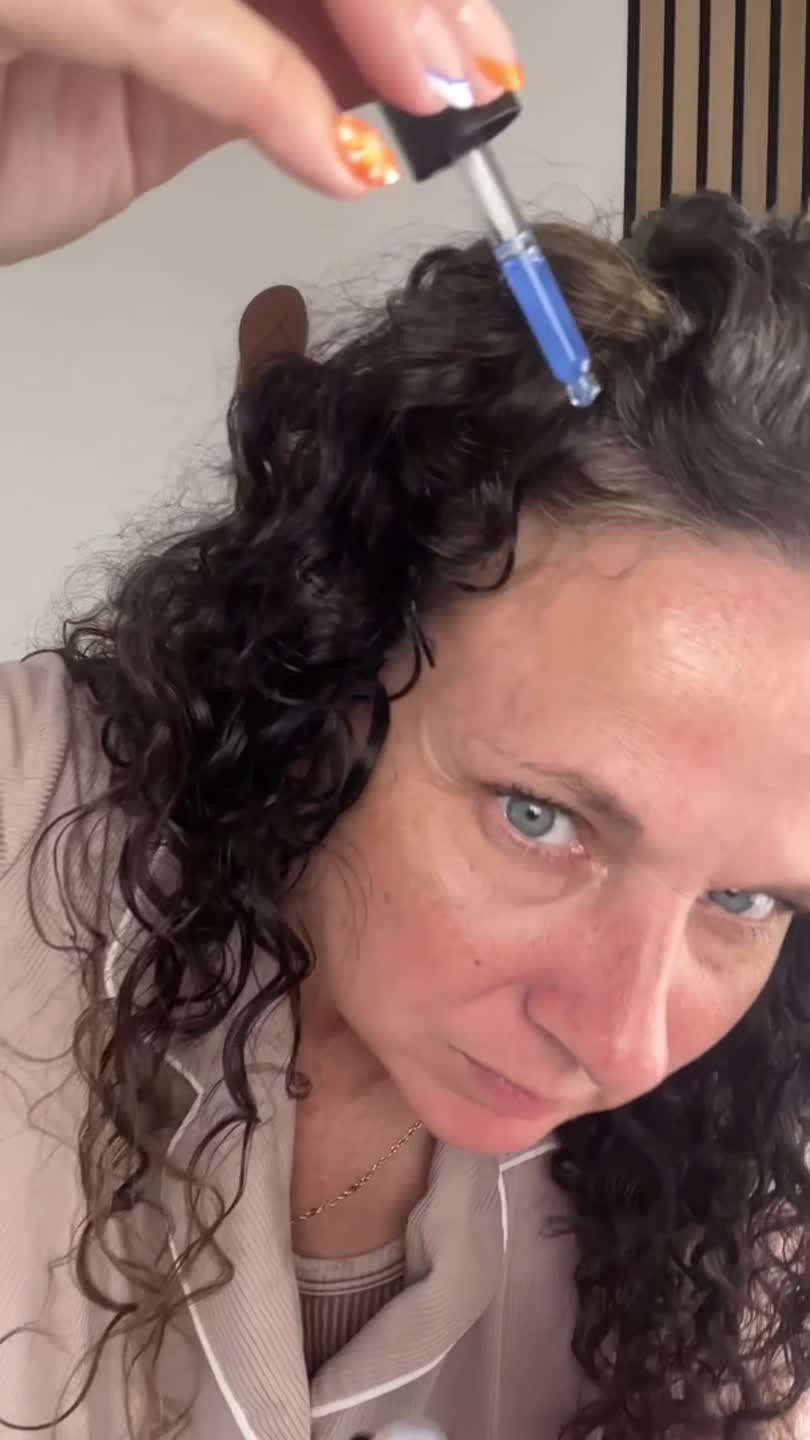
Apply to dry or towel-dry scalp, section by section, and massage in gently. Leave on — do not rinse. Use daily for the first twelve weeks, then every other day for maintenance. The leave-on application is not optional. Contact time with the follicle is the delivery mechanism. Rinsing it off negates the penetration.
Is there a reader discount?
Yes — MIDLIFE10 takes 10% off your first order. It is applied automatically when you check out through this page, so there is nothing to type in. It works on a one-time purchase or on the first payment of either plan; after that the plan bills at its normal rate. Only one code can be used per order, and it is limited to one use per customer.
The plan saving is separate and permanent: monthly delivery is 30% below the one-time price and the annual plan is 42% below it. Both can be cancelled at any time.
Tell me about the guarantees.
30-day guarantee: if you do not notice a change in scalp quality — less tightness, different feel at the root — within 30 days, email us for a full refund. No questions asked.
120-day guarantee: if you do not see a visible change in hair density by day 120, email us for a full refund. You do not need to return the product. We ask for a brief description of your experience so we can improve the protocol for future customers.
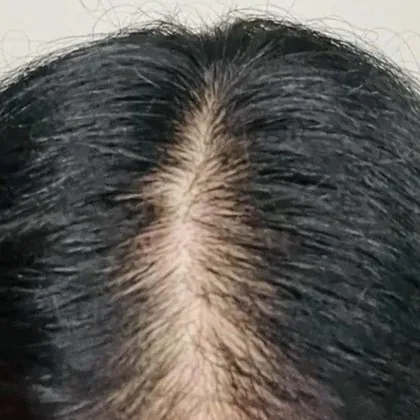 Before
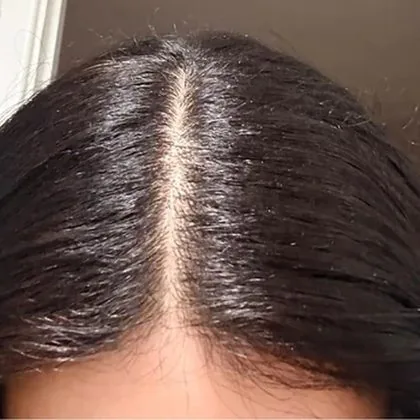 After — 16 weeks
Sarah M., 48 · Leeds · Crown parting · 16 weeks
A follicle that is still miniaturising can be brought back. A follicle that has gone dormant cannot. That line only moves in one direction, and it moves every month.
Secure a place in this batch →Once this run sells through, the next start date is 6–8 weeks away
This batch is 500 units. When it is gone, the next run is 6–8 weeks out.
You have two choices now.
Both are fine. Only one of them changes anything.
🚫 Path 1
Do nothing.
Close this page and come back in six months. The follicles that are resting now will have rested for six more months. They can still be woken up — but the longer they rest, the harder that gets. Some will stop responding altogether.
✅ Path 2
Try it, with nothing to lose.
Use it for 30 days. If your scalp does not feel different, you get every penny back. Use it for 120 days. If you cannot see more hair, you get every penny back. You are not being asked to hope. You are being asked to test it — and the refund is there if it does not work for you.
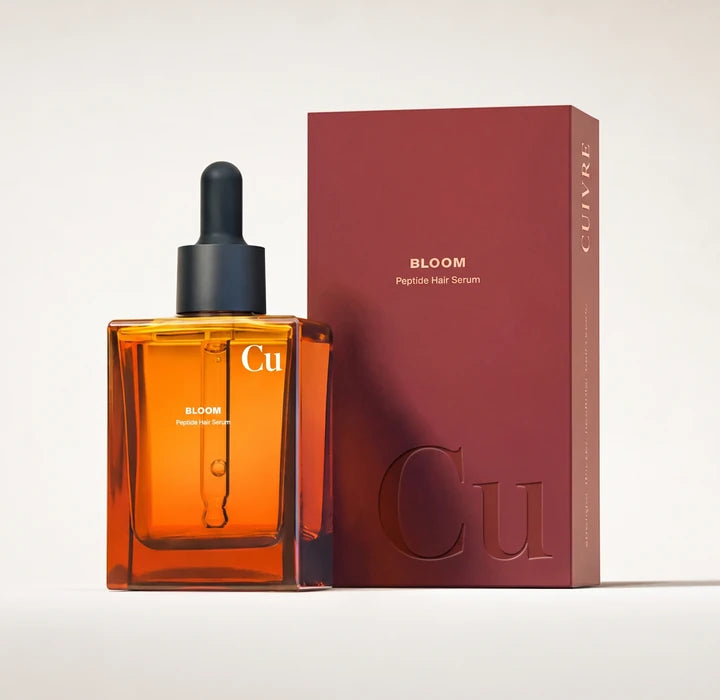
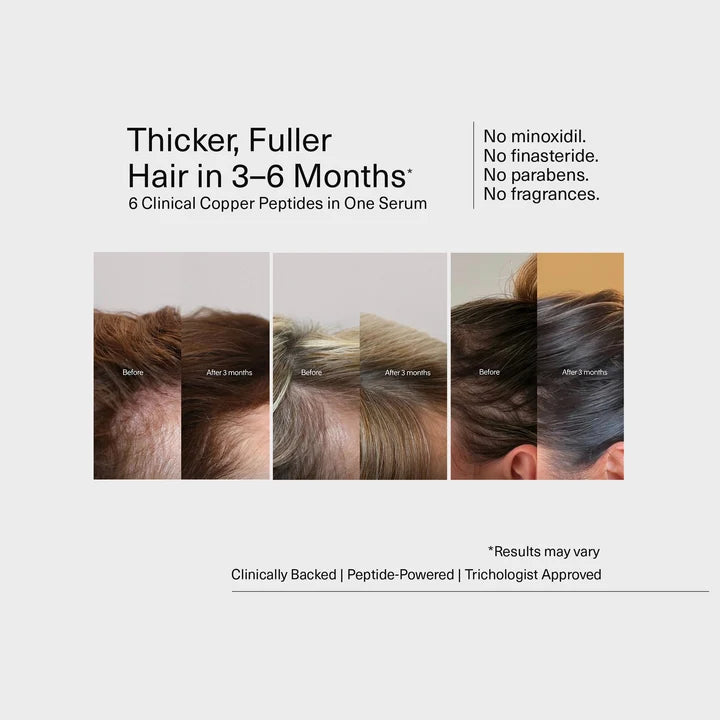







Paige P.
Age 49 · Menopause / peri
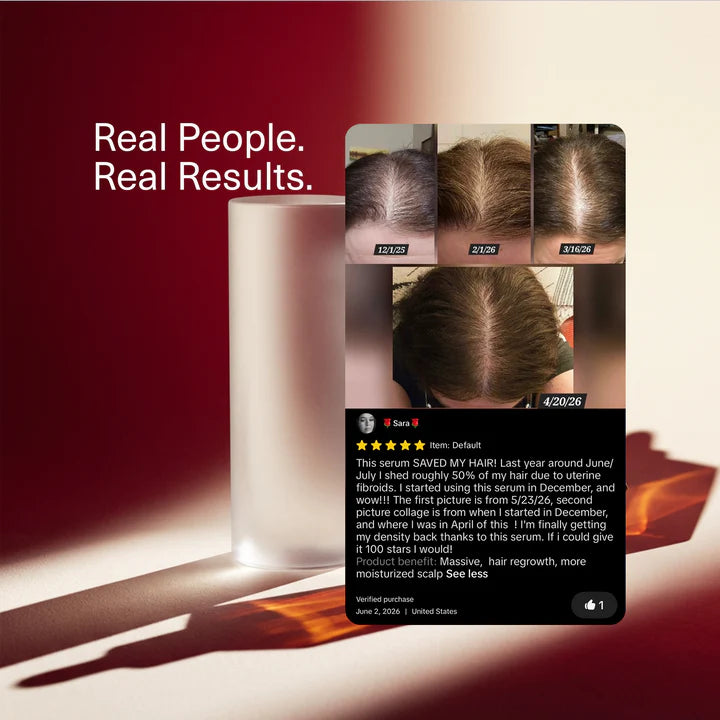
For months I’d been photographing my parting on repeat after perimenopause widened my parting - and the chemist’s vitamins made no dent inside six weeks. My mum asked for the link after seeing my temples, and now we compare partings. My evening now: half a dropper front to crown last thing - then job done.
Mandy C.
Age 52 · Menopause / peri
Too long I’d been saving thickening hacks in secret after perimenopause emptied my temples, and the scalp roller went in the bin inside six weeks. Applied it sinks in fast - no film, no telltale smell. Sensitive heads cope happily. Still faintly amazed, truly.
Doreen G.
Age 33 · Postpartum
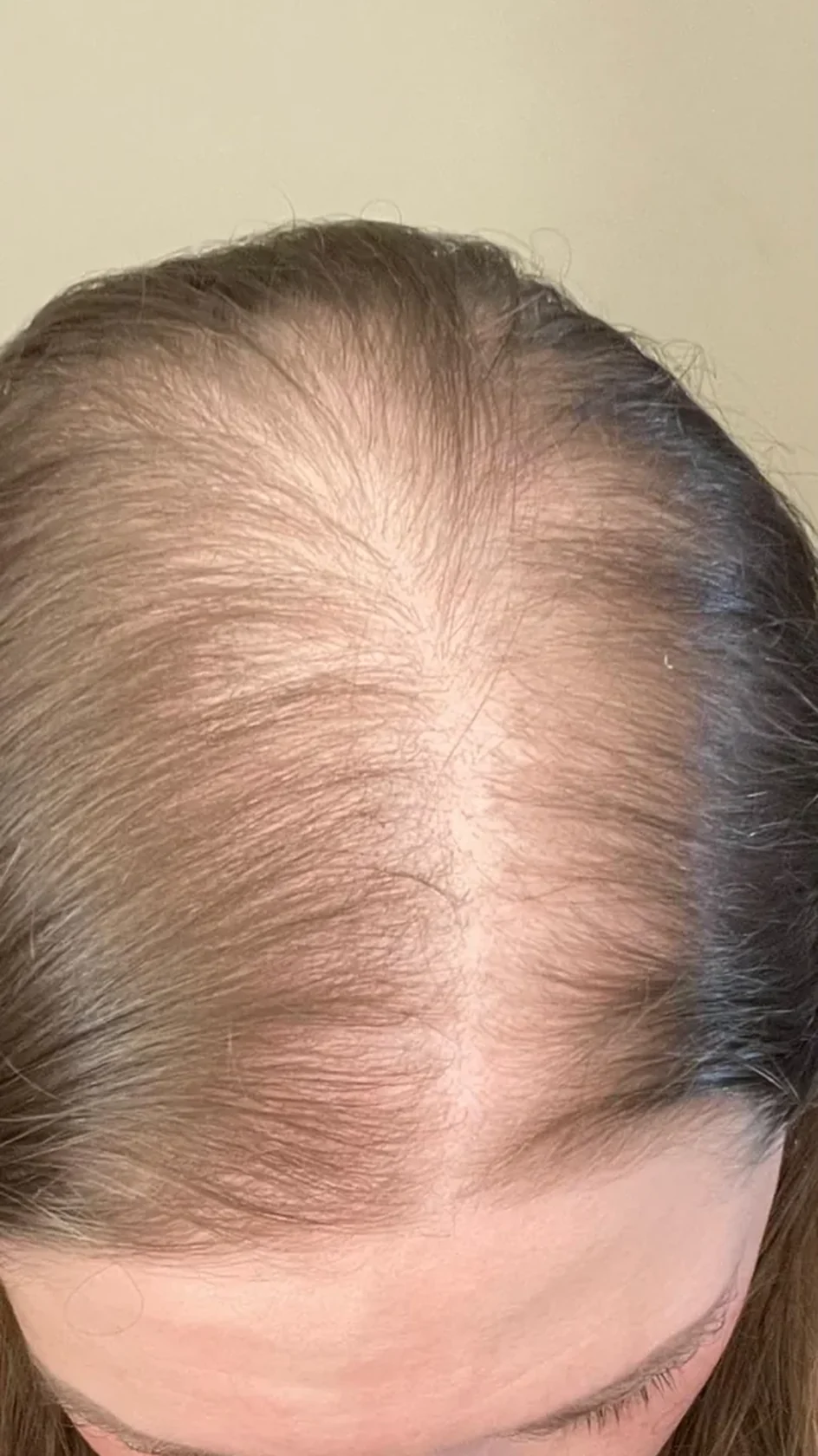
Baby number three filled the brush daily and soon I was photographing my parting without telling anyone - and the rosemary oil over-promised inside six weeks. Application is a few drops around the hairline and patience - which sounds small but isn’t.
Holly F.
Age 26 · PCOS / hormonal
My hormones left wispy temples and had me screenshotting bob ideas by this spring, so the onion shampoo insulted my bank card inside six weeks. Side-by-sides settle it: the old crown picture still makes me wince - while June’s barely shows skin.